



Nayara Energy raises petrol by ₹5 and diesel by ₹3 per litre amid rising global oil costs. Explore the impact on Indian consumers, inflation and the economy.
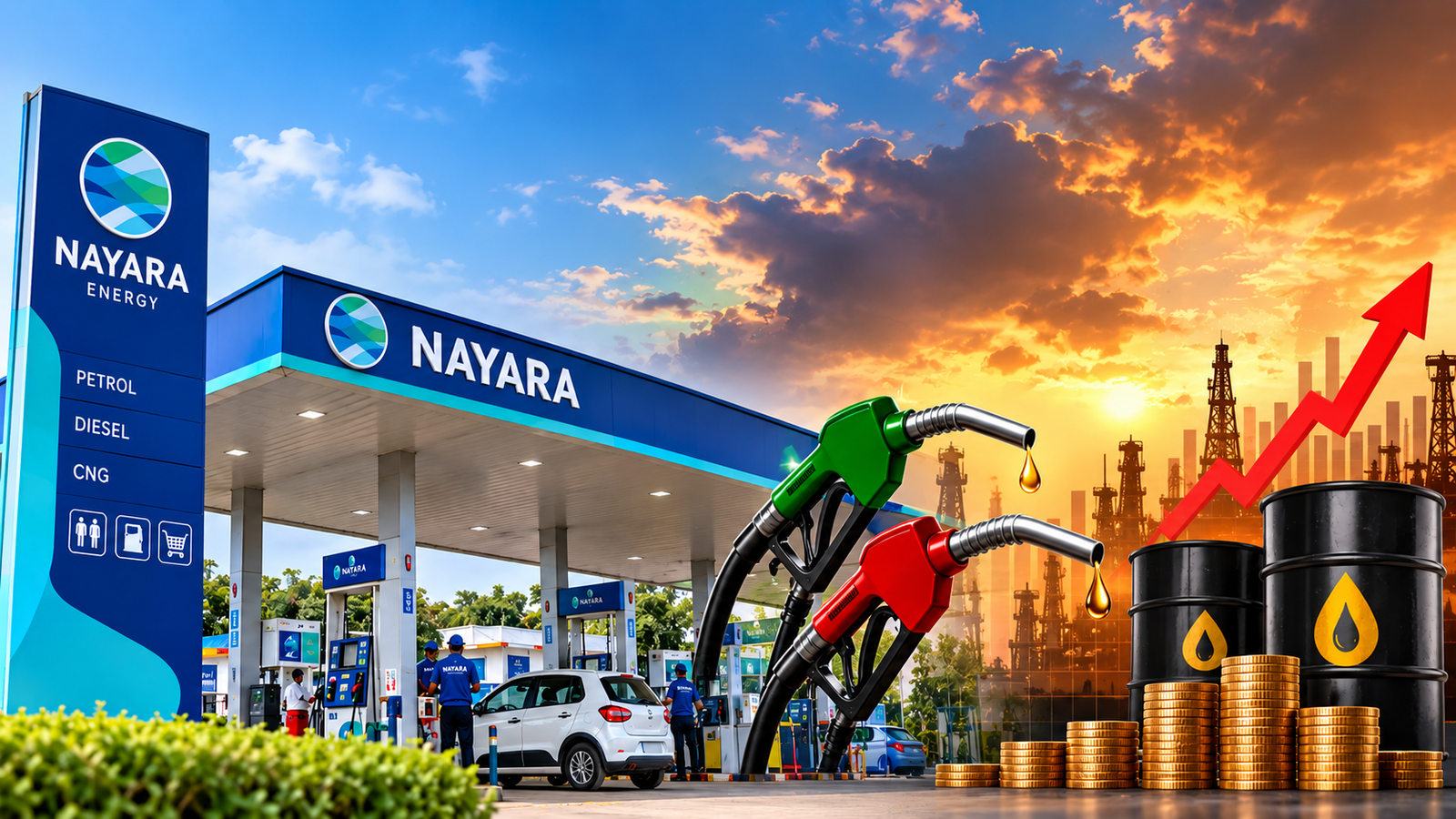
India’s fuel retailing sector is facing renewed pressure as rising international crude oil and refined petroleum product prices increase the cost of supplying fuel to domestic consumers. Against this backdrop, Nayara Energy, India’s largest private fuel retailer, has increased petrol prices by ₹5 per litre and diesel prices by ₹3 per litre, effective from the early hours of Saturday, October 3, 2026.
Nayara Energy: The price revision applies to Nayara Energy’s network of 7,108 petrol pumps across India. The move comes at a time when international energy markets are experiencing volatility amid geopolitical disruptions and elevated crude oil prices. While public-sector oil marketing companies have largely maintained their retail prices, the latest revision by Nayara highlights the growing financial pressure on fuel retailers.
The increase is significant because petrol and diesel are essential inputs for transportation, logistics, agriculture and industrial production. Although the price hike is currently specific to Nayara Energy, it raises wider questions about fuel pricing, inflationary pressures and the sustainability of India’s retail fuel prices if international oil costs remain elevated.
Nayara Energy’s Petrol and Diesel Price Hike
Nayara Energy has increased petrol prices by ₹5 per litre and diesel prices by ₹3 per litre with effect from October 3, 2026. According to reports citing people familiar with the development, the revision was introduced to narrow the gap between domestic retail fuel prices and rising international crude oil and refined-product costs.
Nayara operates 7,108 petrol pumps in India, making it one of the country’s largest private-sector fuel retailers. The company also operates a major oil refinery at Vadinar in Gujarat, with a reported capacity of around 20 million tonnes per year.
The revised prices differ across locations because petrol and diesel retail rates are affected by state-level taxes and other local levies. According to a report by Financial Express, petrol at Nayara outlets in New Delhi reached ₹107.12 per litre, while diesel reached ₹98.20 per litre after the hike. These prices were higher than the reported rates at state-owned outlets in the capital.
The company had not publicly responded to media requests for comment at the time of the reports. Therefore, the stated reasons for the revision are based on information from industry sources and reporting, rather than a detailed official company announcement.
Why Has Nayara Energy Increased Fuel Prices?
The key factor behind the price hike is the increase in international crude oil and refined petroleum product costs. India imports a substantial share of the crude oil it consumes, making its fuel sector sensitive to changes in global energy markets.
Nayara Energy: When international crude oil prices increase, refineries and fuel retailers can face higher procurement and replacement costs. If retail prices remain unchanged, the difference between the cost of supplying fuel and the revenue earned from selling it can reduce marketing margins and create financial losses.
Nayara Energy: Geopolitical uncertainty and disruptions to energy supplies in West Asia have contributed to volatility in global oil markets. Higher crude prices, along with changes in refined-product prices, have added to the cost pressure faced by fuel retailers.
Nayara had previously increased petrol prices by ₹5 per litre and diesel prices by ₹3 per litre on March 26, 2026, following a sharp rise in international oil prices. The company subsequently reversed those increases on July 1, after crude oil prices eased as tensions in West Asia subsided.
The October revision represents another adjustment as the company responds to renewed pressure from higher international costs.
Rising Global Crude Oil Prices Are Pressuring Fuel Retailers
International crude oil prices play a major role in determining the economics of India’s petroleum sector. When global prices rise sharply, oil marketing companies must manage the challenge of balancing procurement costs, refinery operations, transportation expenses and retail prices.
Nayara’s latest price revision reflects the pressure that can emerge when retail fuel prices do not move in line with international costs. State-owned companies such as Indian Oil Corporation, Bharat Petroleum Corporation and Hindustan Petroleum Corporation have largely kept retail prices stable despite fluctuations in global oil markets.
This difference in pricing strategies can create a competitive challenge for private retailers. If private companies increase their prices while competing retailers maintain lower rates, consumers may shift towards comparatively cheaper fuel outlets.
Nayara Energy: However, keeping prices unchanged for an extended period while costs remain elevated can also reduce profitability. This creates a difficult balance between maintaining market share and protecting financial performance.
The sustainability of fuel prices will therefore depend partly on how international crude oil and refined-product prices evolve in the coming weeks.
Potential Impact on India’s Inflation
Nayara Energy: Fuel prices have a direct and indirect relationship with inflation. A rise in petrol and diesel prices increases the cost of fuel for consumers and businesses. Diesel is particularly important because it is widely used in commercial transportation, agriculture, construction and industrial operations.
When transportation costs increase, businesses may face higher expenses for moving raw materials and finished products. Some companies may absorb these additional costs, while others may pass a portion of them on to consumers through higher prices.
This can contribute to inflationary pressure if fuel price increases become widespread and persist over time.
Nayara Energy: However, the latest Nayara Energy hike alone does not establish that India’s overall inflation rate will rise. Its direct impact depends on the company’s share of fuel sales in different regions, the response of other retailers, international oil prices and the extent to which businesses pass on higher costs.
If global crude oil prices moderate and other retailers keep their prices unchanged, the broader inflationary effect could remain limited. A sustained rise across the wider fuel retail market would create a more significant risk.
Higher Transportation and Logistics Costs
Transportation is one of the sectors most exposed to diesel price changes. Trucks, buses, commercial vehicles and several other forms of transport depend heavily on diesel.
Nayara Energy: A diesel price increase can raise operating expenses for transport companies, particularly those that operate large vehicle fleets and cover long distances. If these companies face sustained higher costs, they may revise freight charges or negotiate higher transportation rates with their customers.
Higher freight costs can affect a broad range of sectors, including agriculture, retail, manufacturing, construction and e-commerce.
For example, agricultural produce often travels from farms to wholesale markets, processing centres and retail outlets. An increase in transportation costs can reduce the margins of farmers, traders and distributors or contribute to higher prices for consumers.
Nevertheless, the impact will vary depending on the fuel retailer used, the availability of alternative outlets, existing transport contracts and the ability of businesses to absorb additional expenses.
Pressure on Household Budgets and Consumer Spending
Nayara Energy: Higher petrol and diesel prices can increase household expenses, especially for families that rely on private vehicles for commuting and daily activities.
For consumers who purchase fuel at Nayara outlets, the additional expense will depend on how much petrol or diesel they use. Even a relatively small increase per litre can become significant for regular commuters over a month.
Nayara Energy: Households may respond by reducing discretionary spending, changing travel habits or switching to lower-cost fuel outlets where convenient. The extent of these adjustments will depend on household income, vehicle usage and local fuel prices.
If fuel price increases spread across the retail market, the impact could extend beyond direct fuel purchases. Higher transportation and distribution costs can gradually affect the prices of everyday goods and services.
This is particularly important for lower- and middle-income households, which often have less flexibility to absorb increases in essential expenses.
Financial Pressure on Oil Marketing Companies
The price hike also draws attention to the financial challenges faced by India’s oil marketing companies.
Nayara Energy: According to estimates cited in recent reporting, rating agency ICRA assessed that oil marketing companies were facing negative marketing margins of around ₹8 per litre on petrol and ₹9 per litre on diesel in September 2026. ICRA also estimated combined daily losses of approximately ₹530 crore across petrol, diesel and LPG during the period.
These are estimates, not audited financial results, and the actual financial position of individual companies may differ depending on their refining operations, supply arrangements, taxes and retail pricing.
Oil marketing companies must manage the relationship between international input costs and domestic retail prices. When selling prices do not adjust as costs rise, marketing margins can become negative, putting pressure on cash flows and working capital.
Nayara’s decision to raise retail prices is an example of how a private retailer may respond to this pressure. Public-sector companies face different commercial and policy considerations, and their decisions cannot automatically be assumed to follow the same approach.
Difference Between Private and State-Owned Fuel Retailers
Nayara Energy: India’s fuel retailing market includes both private and public-sector companies. State-owned retailers, including Indian Oil Corporation, Bharat Petroleum Corporation and Hindustan Petroleum Corporation, control more than 90% of the country’s fuel retail outlets.
These companies have largely maintained stable petrol and diesel retail prices since the adjustments made in May 2026. Nayara’s October price hike therefore widens the difference between its prices and those of state-owned outlets in markets where the latter have not revised their rates.
For consumers, this difference can influence where they purchase fuel. For private retailers, higher prices may help reduce the losses associated with elevated international costs, but they can also create a risk of lower sales volumes if competing outlets remain cheaper.
The government has also raised concerns about private fuel retailers restricting sales at some outlets. On October 1, 2026, Oil Secretary Neeraj Mittal said that private retailers would be asked to stop rationing fuel sales, emphasizing that retailers should not cap fuel sales.
The issue highlights the challenge of maintaining reliable fuel availability while retailers face pressure from the difference between domestic retail prices and market-linked costs.
Will Petrol and Diesel Prices Increase Across India?
Nayara Energy: It is uncertain whether other fuel retailers will follow Nayara Energy’s decision. Public-sector oil marketing companies have largely maintained their retail prices, while Jio-bp had not announced a corresponding price revision in the reports available on October 3.
Future price decisions will depend on several factors, including international crude oil prices, refined-product costs, currency movements, marketing margins, domestic demand and government policy.
If global oil prices remain elevated for a prolonged period, pressure on retailers could intensify. However, a fall in international prices could reduce the need for further retail price adjustments.
Consumers should therefore distinguish between a price revision by one private retailer and a nationwide increase across all petrol pumps.
What Does the Price Hike Mean for India’s Economy?
The Nayara Energy price hike highlights the relationship between global energy markets and India’s domestic economy. As a major crude oil importer, India is exposed to international price volatility, which can affect the country’s import bill, business costs and inflation outlook.
If higher oil prices persist, India could face an increase in its overall energy import expenditure. This may also influence foreign-exchange demand and put pressure on the country’s external balance, depending on import volumes, export earnings and other financial flows.
For businesses, sustained higher fuel costs can affect production, logistics and operating margins. For households, they can reduce disposable income and influence consumption decisions.
At the same time, the overall economic impact should not be overstated. The Nayara hike is limited to its own retail network, and the effects on national inflation and growth will depend on whether higher costs spread more widely and how long they persist.
Rising fuel prices can have a significant impact on India’s inflation and economic growth. Read more about on the Macro Map for Indian economy and the impact of rising global oil prices to understand how energy costs influence businesses and consumers.
For more information on India’s petroleum sector, fuel pricing and energy policies, visit the Ministry of Petroleum and Natural Gas, which provides official updates on India’s oil and gas industry.